Turboprop Charter: New York to Miami
Published · Updated
The turboprop is generally the most economical way to fly privately between New York and South Florida. Aircraft like the King Air 350 and Pilatus PC-12 trade a little speed for markedly lower hourly costs and the ability to use the smallest regional fields — a practical, no-frills entry to private aviation on this route.
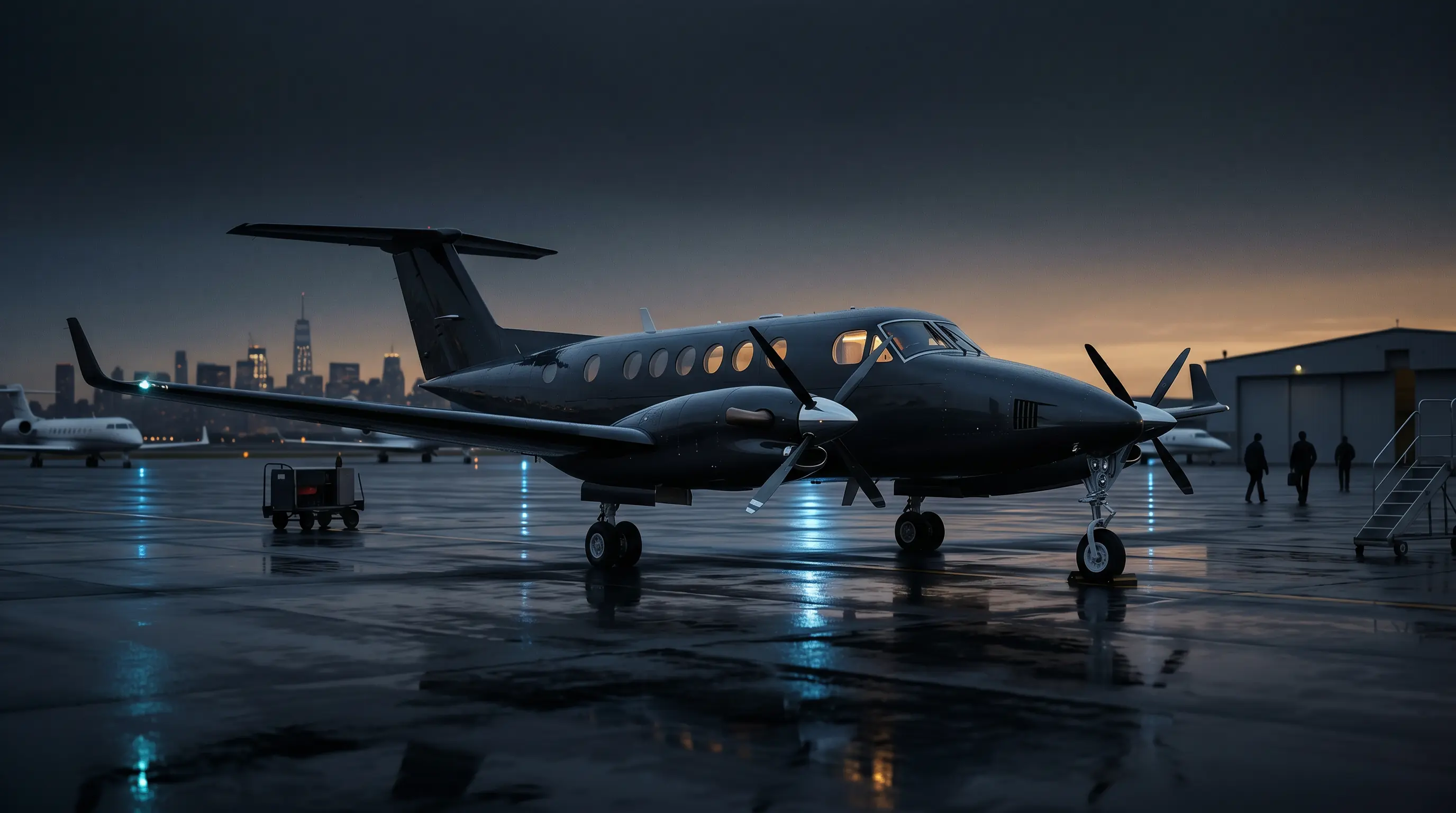
Private charters between New York and Miami typically depart from Teterboro Airport (TEB), Westchester County Airport (HPN), Morristown Municipal Airport (MMU), or Republic Airport (FRG) and arrive at Miami-Opa Locka Executive Airport (OPF), Fort Lauderdale Executive Airport (FXE), Miami International Airport (MIA), or President Donald J. Trump International Airport (DJT).
Compare Turboprops for New York to Miami

Beechcraft King Air 350 Charter
View details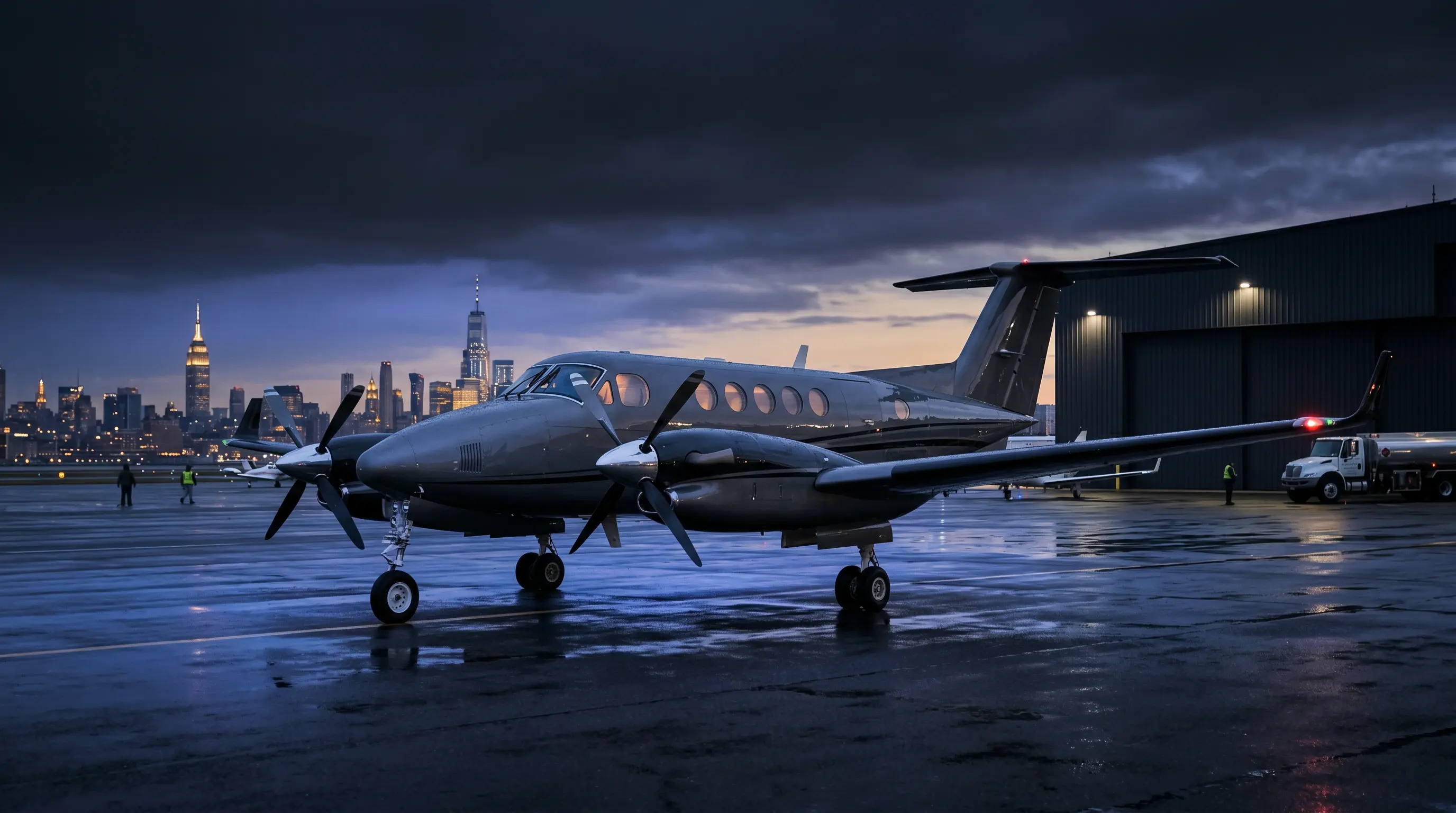
Beechcraft King Air 260 Charter
View details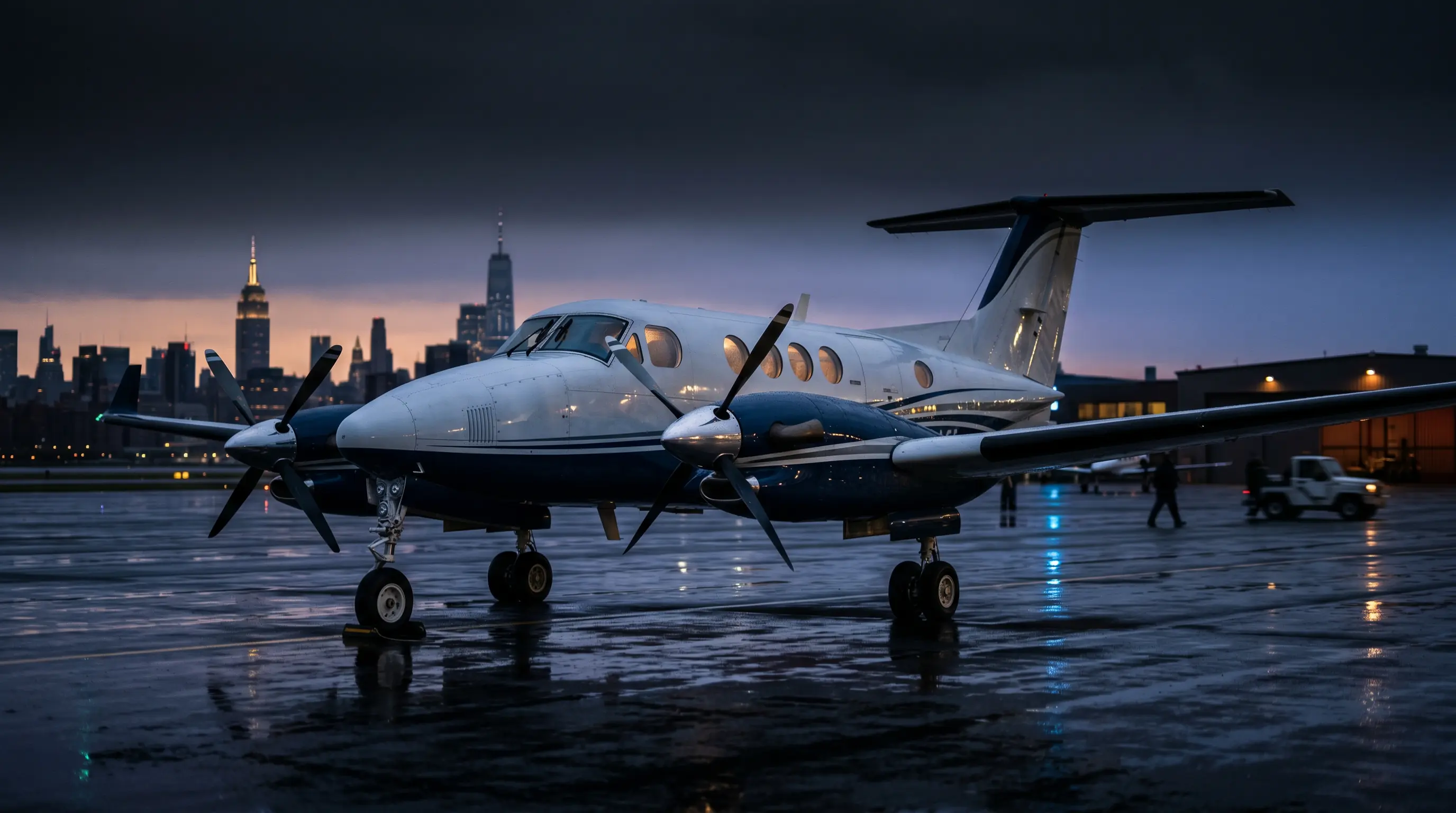
Beechcraft King Air C90GTx Charter
View details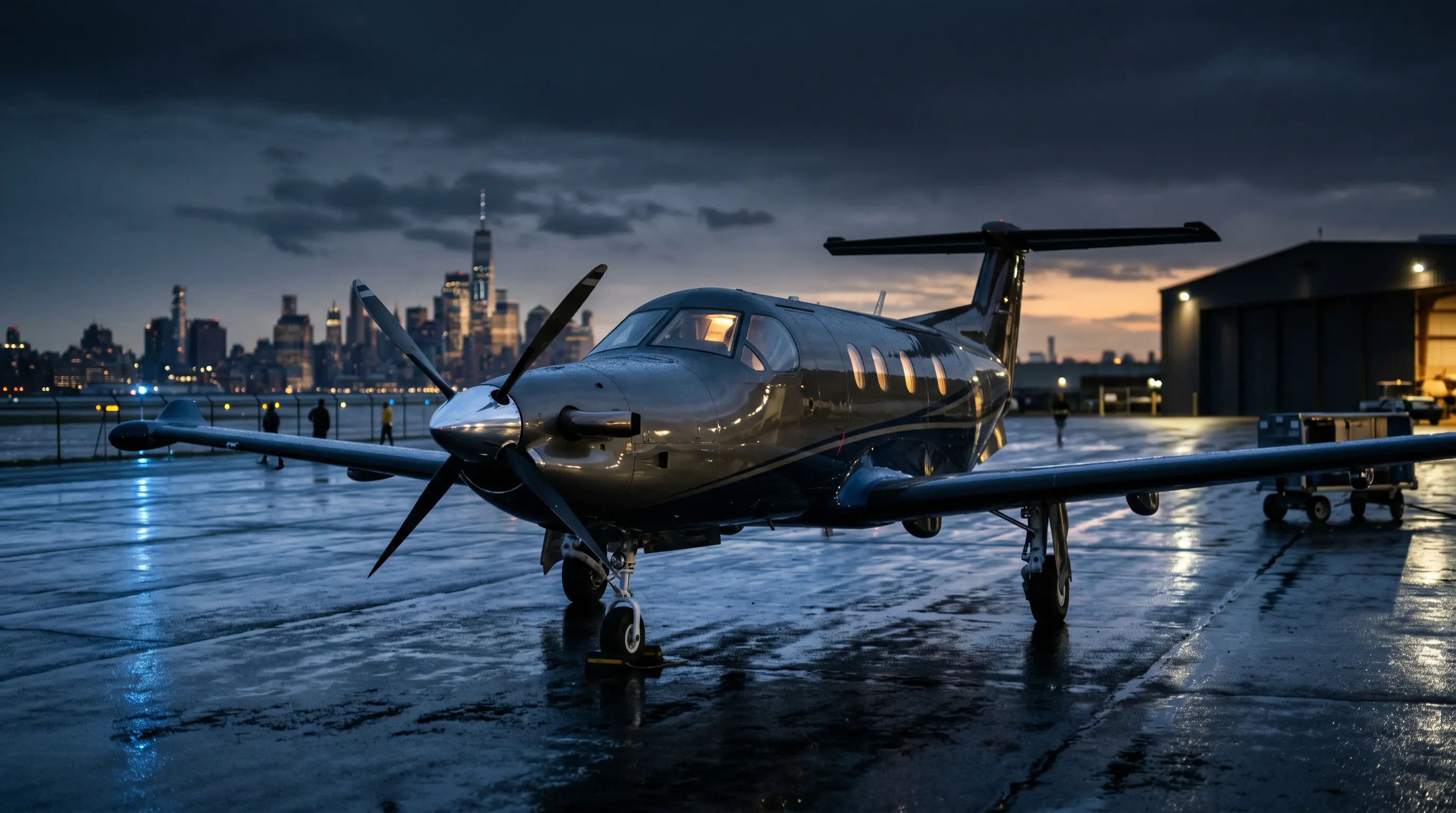
Pilatus PC-12 Charter
View details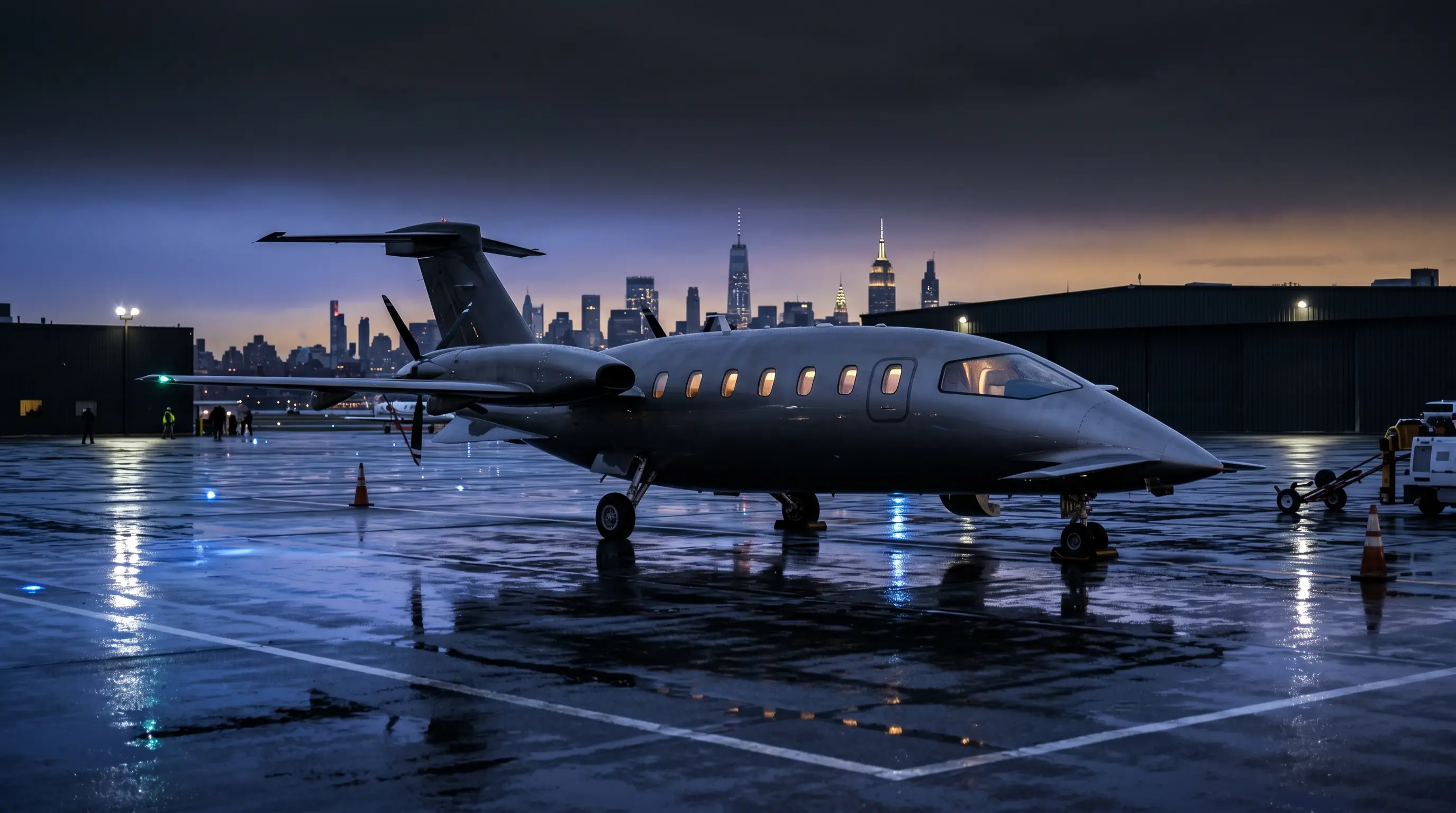
Piaggio P.180 Avanti EVO Charter
View details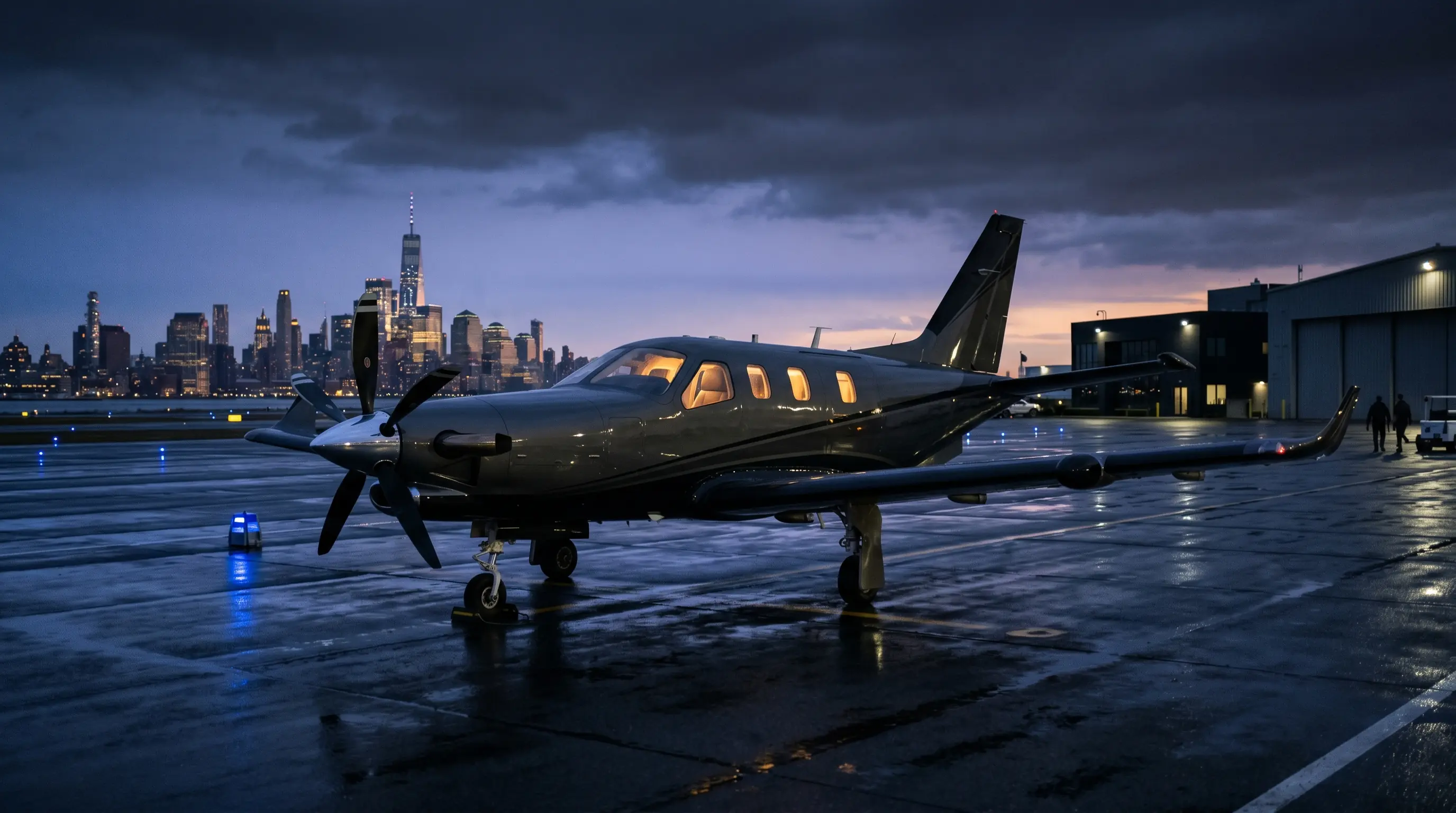
Daher TBM 960 Charter
View details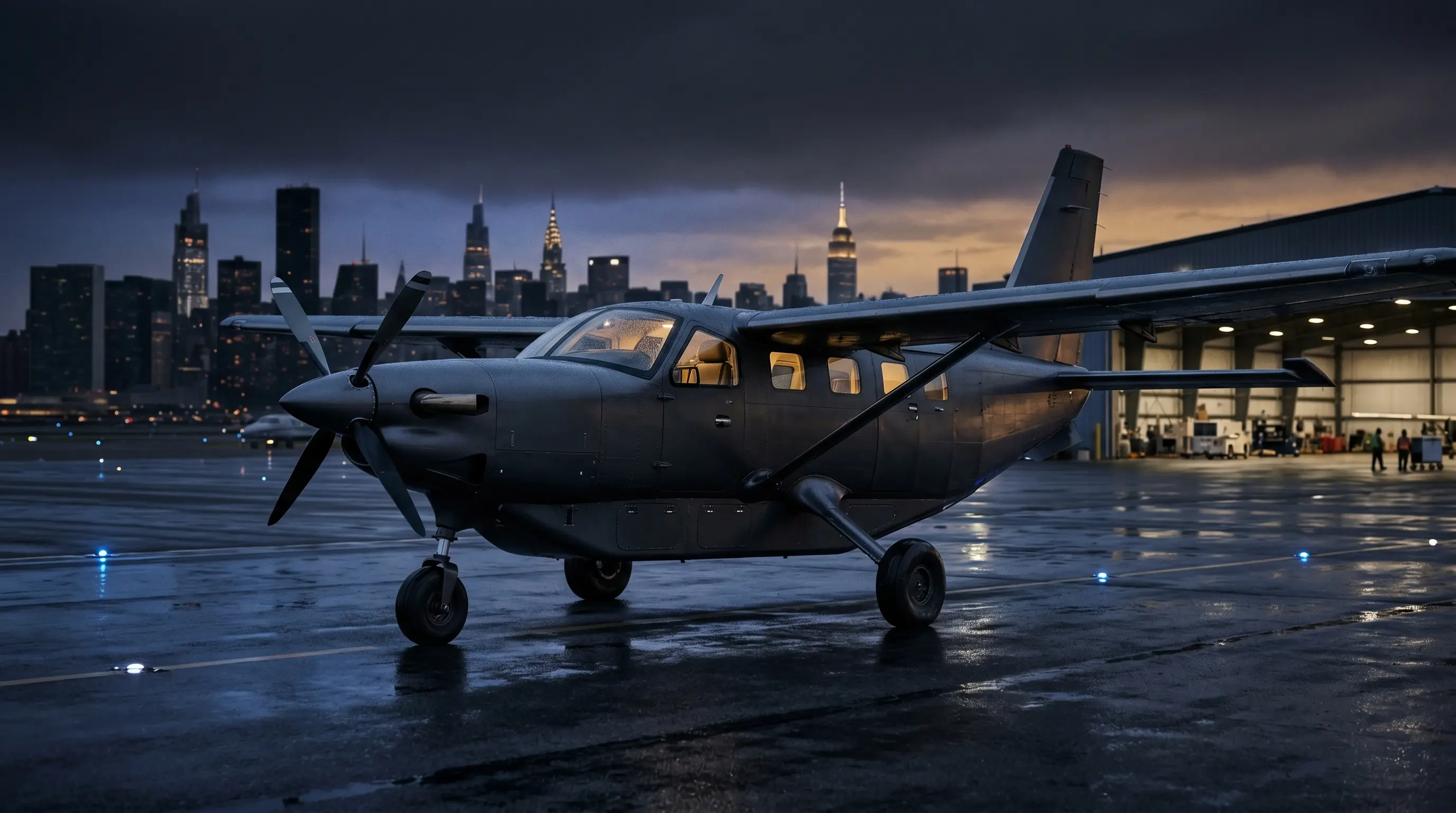
Daher Kodiak 900 Charter
View details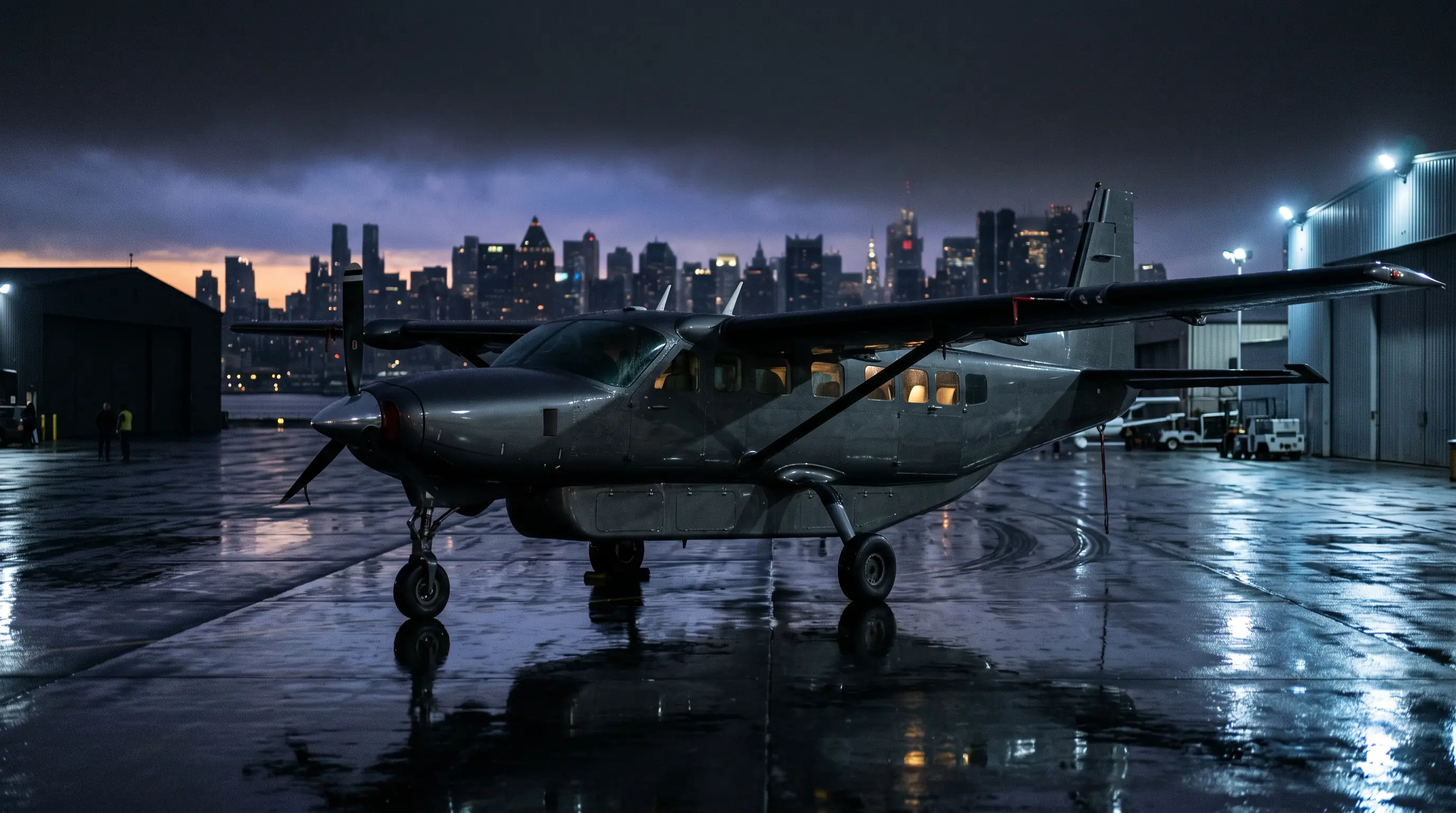
Cessna Grand Caravan EX Charter
View details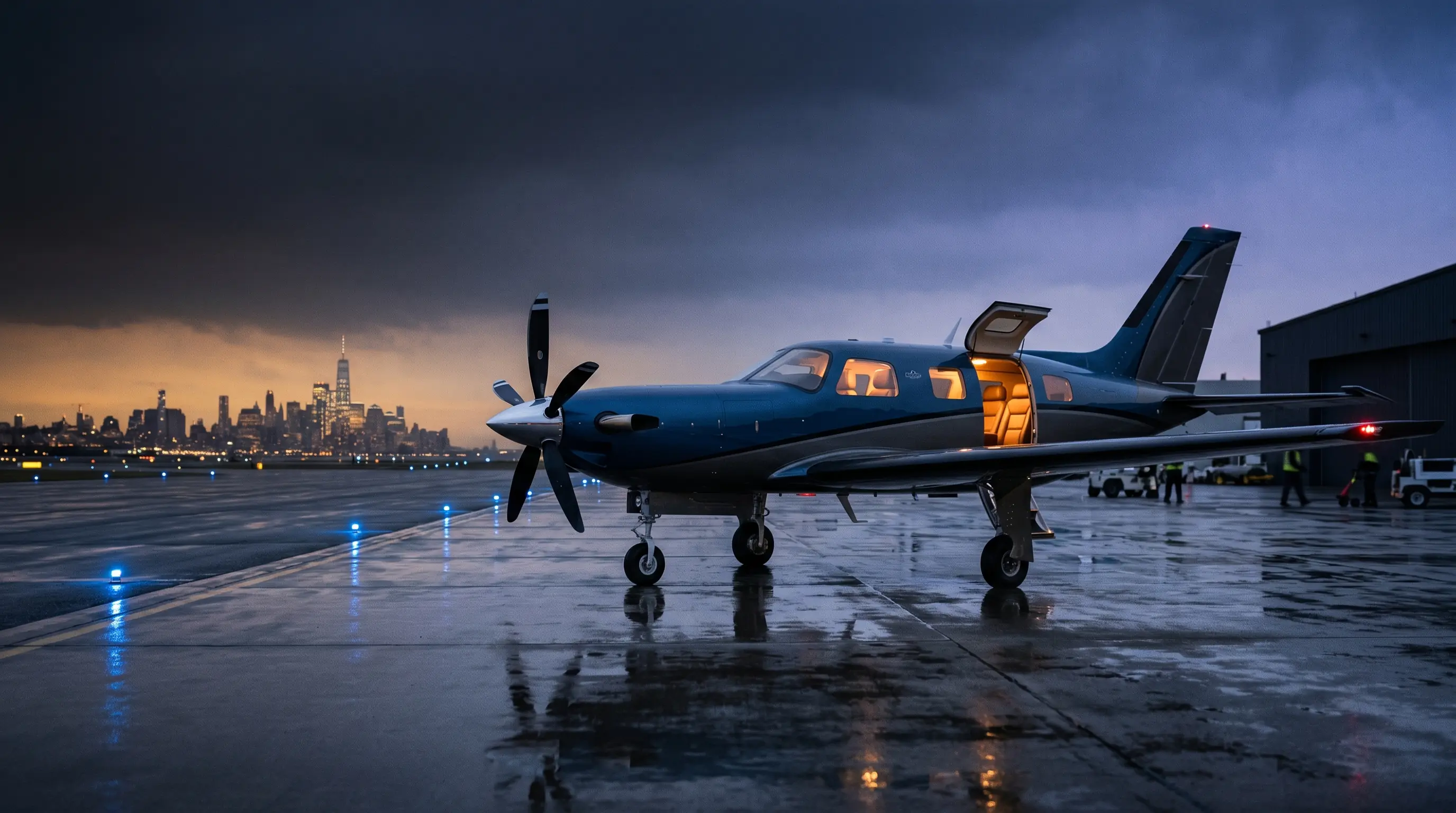
Piper M600/SLS Charter
View details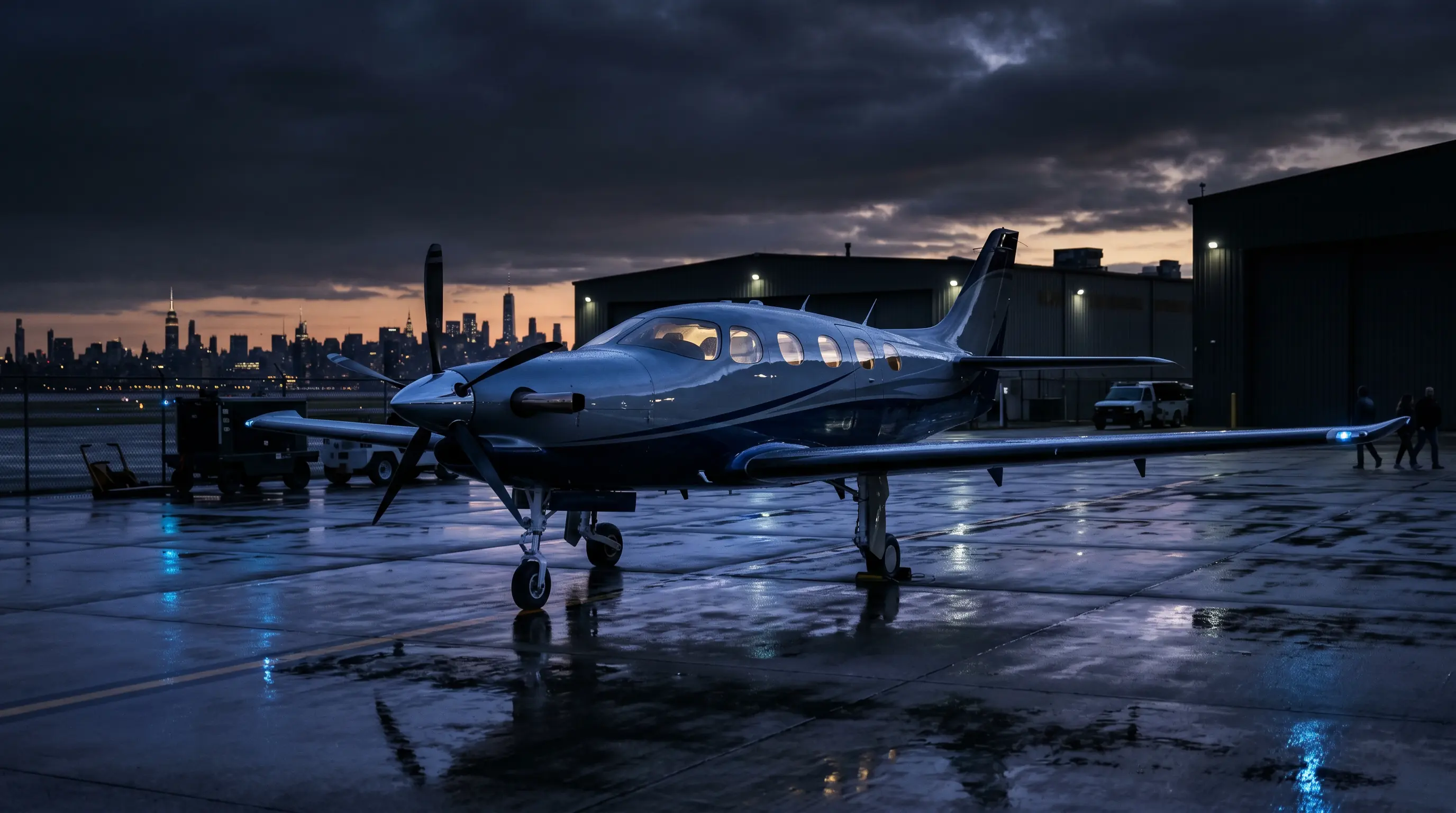
Epic E1000 GX Charter
View details
Compare at a glance
| Aircraft | Passengers | Range | Cruise | From (one-way) |
|---|---|---|---|---|
| King Air 350 | 8 | 1,806 nm | 312 ktas | $9,000 |
| King Air 260 | 6–8 | 1,720 nm | 310 ktas | $9,000 |
| King Air C90GTx | 5–6 | 1,260 nm | 272 ktas | $8,000 |
| Pilatus PC-12 | 6–8 | 1,765 nm | 290 ktas | $8,500 |
| Avanti EVO | 6–7 | 1,510 nm | 402 ktas | $9,500 |
| TBM 960 | 4 | 1,730 nm | 330 ktas | $7,500 |
| Kodiak 900 | 6 | 1,129 nm | 210 ktas | $6,500 |
| Grand Caravan EX | 9–10 | 912 nm | 185 ktas | $5,500 |
| M600/SLS | 4–5 | 1,658 nm | 274 ktas | $6,500 |
| E1000 GX | 4–5 | 1,560 nm | 333 ktas | $7,000 |
Why fly a turboprop on the New York–Miami route
Modern turboprops carry enough range to fly the 950-mile leg nonstop with a full cabin. The trade-off versus a jet is speed — expect roughly three and a half hours in the air rather than two and a half — in exchange for the lowest charter rate in private aviation.
Their shorter runway requirements also open up regional airports that jets cannot use, which can put you closer to your start or end point.
- Lowest hourly cost of any private aircraft
- Nonstop New York to Miami with a full cabin
- Runway flexibility that reaches more regional airports
- Right-sized for one to nine travelers

Turboprop or light jet?
If budget is the priority and an extra hour aloft is acceptable, a turboprop is hard to beat. If you would rather arrive faster in a higher, quieter, fully pressurized jet cabin, a light jet is the next step up — and we will quote both side by side so the difference in time and cost is clear.
Who charters turboprops on this run
Cost-conscious travelers, families and small groups of up to nine, and anyone needing a smaller New York or Florida field than the jet airports serve. Turboprops are also a strong choice for shorter-notice trips, where their broad availability helps.
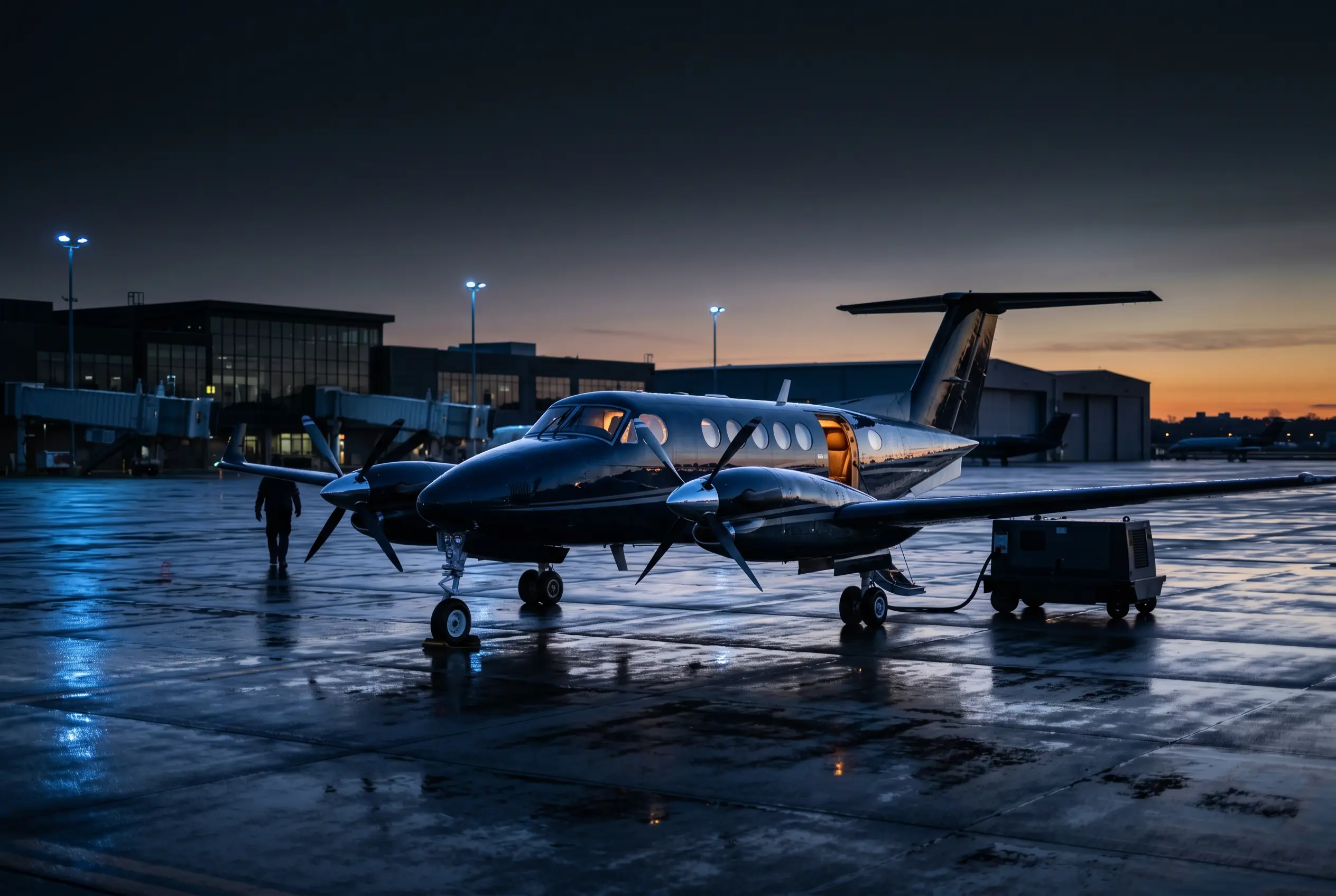
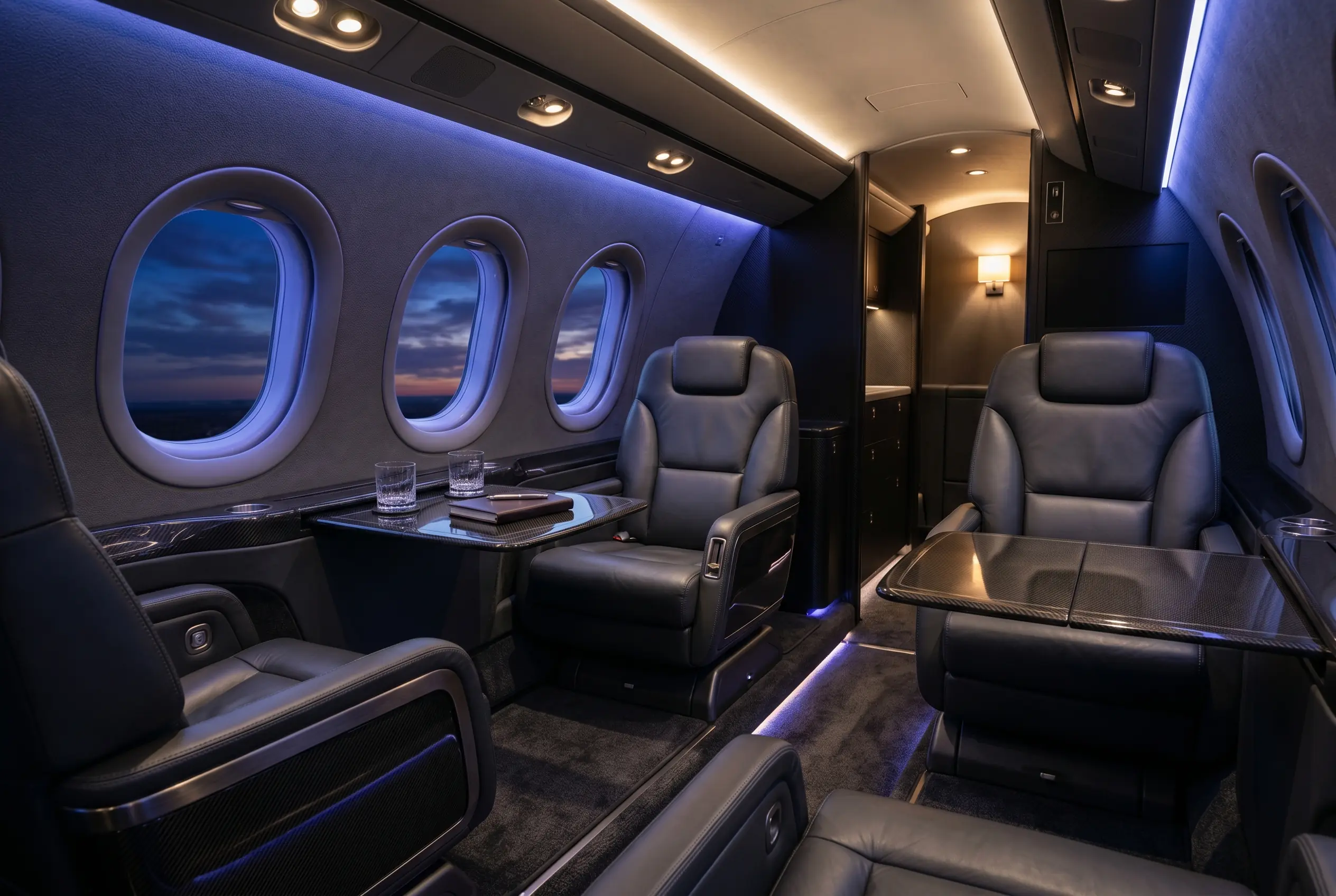
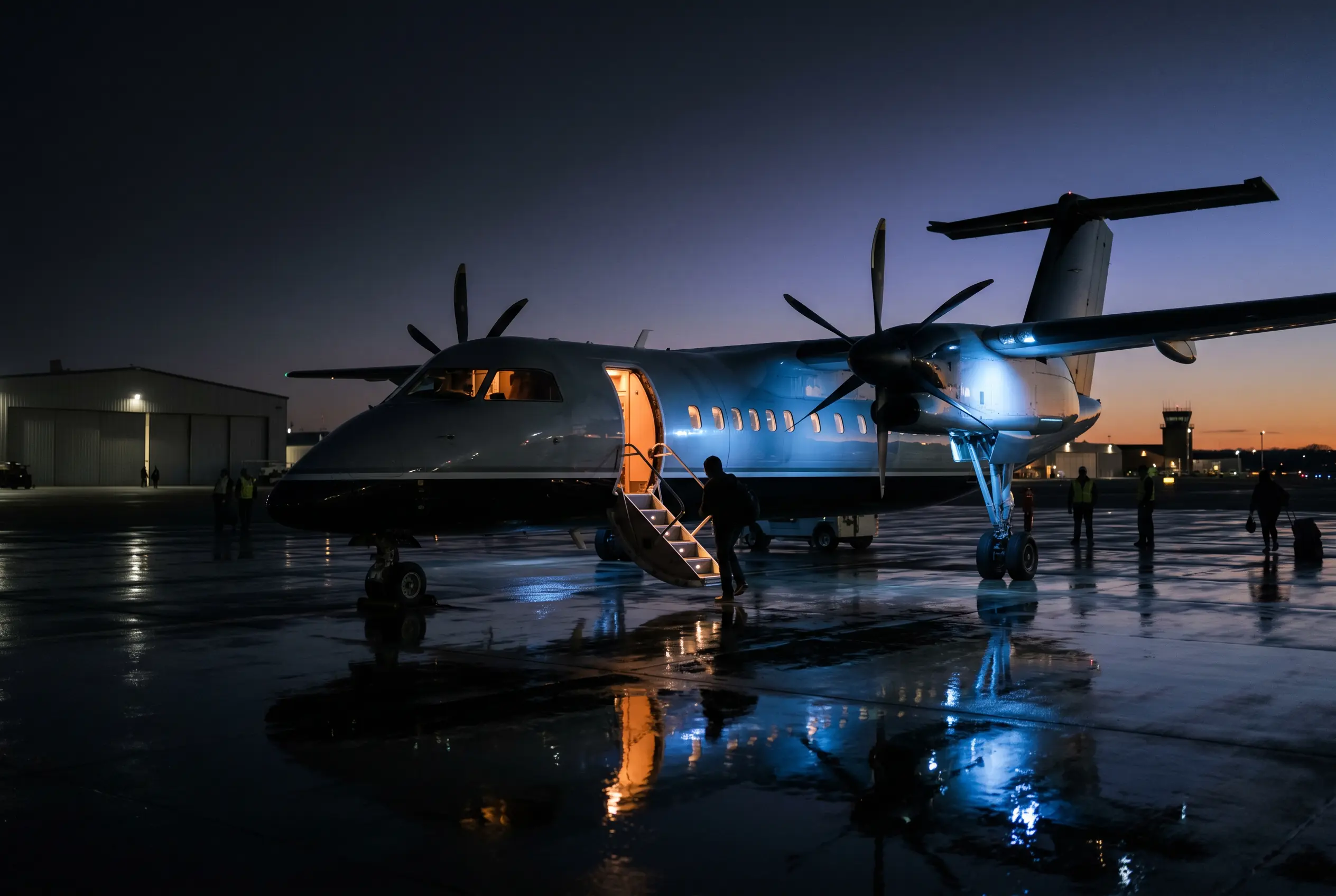
Turboprops gallery
Frequently asked questions
How much does a turboprop charter from New York to Miami cost?
A turboprop is usually the most affordable private option on the route — typically from around $9,000 to $14,000 one-way (estimated), depending on the aircraft and the date. We quote an itemized estimate with fuel, fees, and taxes included.
Can a turboprop fly New York to Miami nonstop?
Yes. Modern turboprops such as the King Air 350 and Pilatus PC-12 have the range to fly the roughly 950 miles nonstop with a full cabin, in about three and a half hours.
How is a turboprop different from a jet?
A turboprop cruises lower and slower than a jet — about an hour longer on this route — but costs less to charter and can use smaller airfields. The cabins are pressurized and comfortable, and the experience at the FBO is the same as it is on a jet.
How many passengers fit on a turboprop?
Up to nine, depending on the aircraft. The King Air 350 typically seats eight to nine; the single-engine Pilatus PC-12 seats six to eight in a club layout.
Ready to fly New York to Miami?
Send your dates and party size for estimated pricing across suitable aircraft — typically within two hours, with no obligation.
 +1 (332) 290-1479